
For most commercial properties, the answer to how often should windows be professionally cleaned ranges from monthly to twice a year. The right cleaning frequency depends on the building, its location, environmental exposure, foot traffic, and how important spotless glass is to customers, tenants, employees, and visitors.
However, not every window in a commercial property needs to be professionally cleaned at the same interval. Storefronts, display windows, entrances, and lobby glass often require frequent cleaning, while upper-floor exterior windows may remain presentable much longer.
The most effective approach is therefore not to choose one arbitrary frequency for the entire building. It is to establish a window cleaning schedule based on visibility, exposure, use, and the standards your facility needs to maintain.
What is the right cleaning frequency for commercial windows?
For certain areas of an office building, professional cleaning twice a year may be sufficient. For customer-facing glass in a busy retail environment, waiting six months could be far too long.
A practical schedule starts by considering how quickly each type of glass becomes visibly dirty and how much that glass contributes to the appearance of the property.
| Property or window type | Recommended starting frequency | Why |
|---|---|---|
| Office buildings | Quarterly to semiannually | Maintains a clean, professional exterior |
| Entrances and lobby glass | Monthly or more often | High visibility, fingerprints, and constant traffic |
| Retail storefronts | Weekly to monthly | Directly affects the customer-facing appearance |
| Premium retail display windows | Weekly or as needed | Clear glass supports product presentation |
| Healthcare facilities | Monthly to quarterly | High visitor traffic and professional appearance |
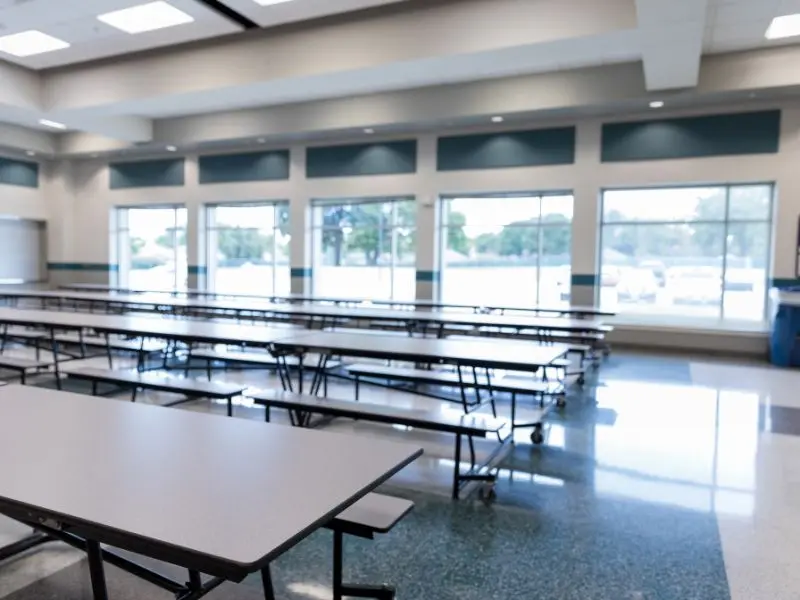
| Schools and educational facilities | Semiannually | Can coordinate with breaks and seasonal maintenance |
| Upper-floor or less-visible exterior glass | Semiannually | Lower contact and visibility can allow longer intervals |
These frequencies should be treated as starting points rather than universal rules. A building exposed to heavy traffic, nearby construction sites, trees, pollen, or other environmental contaminants may need professional window cleaning services at shorter intervals.
What determines how often your windows need cleaning?
A schedule that works for one commercial property may not work for another building only a few miles away. Facility managers should consider how the glass is used, where it is located, and what it is exposed to before establishing service intervals.
Location and environmental exposure
Exterior glass continuously collects dirt and grime from the surrounding environment. Traffic pollution, dust, pollen, trees, rain residue, and nearby construction can all affect how quickly a window loses its clean appearance.
New Jersey adds seasonal considerations to the equation. Spring pollen can accumulate rapidly on exterior surfaces, while winter weather and road salt residue can make some properties require additional attention. For certain facilities, spring and fall can therefore be useful points for evaluating exterior glass and determining whether seasonal deep cleanings are appropriate.
Buildings close to busy roads, parking areas, active construction, or other significant sources of airborne residue may require shorter cleaning intervals.
Foot traffic and window visibility
The more visible the glass is to customers, tenants, and visitors, the shorter the cleaning interval should generally be.
Entrance doors and lobby glass are touched throughout the day. Storefront windows are viewed from close range. Fingerprints, smudges, streaks, and other marks that might be barely noticeable on an upper-floor window can immediately stand out at an entrance.
That is why regular cleaning of high-contact glass may be required between complete professional services.
Building and window type
Window location and accessibility also matter. Ground-level glass can usually be inspected easily and receives more direct contact. Upper-floor and difficult-to-reach windows have different access and scheduling requirements.
The objective is not simply to have every clean window serviced at identical intervals. The objective is to allocate professional maintenance according to the actual needs of each area.
Storefront and display windows need more frequent cleaning
For retail businesses, especially jewelry stores, luxury fashion retailers, department stores, and other premium locations, glass is more than another building surface. It is part of the product presentation.
Display windows are designed to let customers see merchandise clearly. Fingerprints, streaks, pollen, dust, and water spots can create a visual barrier between the customer and the products being presented.
Clean glass helps the storefront do its job: present products clearly, support the brand image, and create a polished first impression.
Professional window washing can also help preserve natural light, maintain the visual quality of the storefront, and support the overall curb appeal of the property.
For premium retailers, ideally windows facing customers should be evaluated regularly instead of waiting for a fixed calendar date when the glass is already visibly dirty. If marks repeatedly appear between scheduled visits, the interval should be adjusted.
A tailored schedule for every window
No. Dividing windows according to visibility and exposure can provide a more efficient maintenance strategy than applying one cleaning interval throughout the entire property.
For facility managers, this approach helps direct the maintenance budget toward the glass that has the greatest effect on visitors, customers, tenants, and the overall presentation of the building.
| Priority | Typical areas | Cleaning frequency |
|---|---|---|
| High | Storefronts, display windows, entrances, lobby glass | Most frequent |
| Medium | Ground-level and highly visible exterior windows | Regular scheduled cleaning |
| Lower | Upper-floor, low-contact exterior windows | Less frequent |
This tiered approach can keep the most important areas consistently presentable without over-servicing windows that do not require the same level of attention.
Experienced professional window cleaners can assess visibility, access, environmental exposure, and current glass condition to help determine appropriate service intervals instead of relying on a one-size-fits-all schedule.
Situations that require more frequent window cleaning
Even a well-designed schedule needs to remain flexible. Temporary environmental or operational changes can cause glass to become dirty much faster than normal.
A commercial property may need additional service during periods of heavy pollen, winter road salt and grime, nearby construction, increased traffic or pollution, bird activity, tree residue, or unusually heavy customer traffic. Visible fingerprints, water spots, and streaks on customer-facing glass are also practical indicators that the existing schedule may not be sufficient.
A simple rule can help facility managers make the decision: if windows consistently look dirty before the next scheduled visit, the interval between services is probably too long.
Increasing the frequency does not necessarily mean changing the schedule for every window. The adjustment may only be necessary for entrances, storefronts, display glass, or other high-priority areas.
A consistent window cleaning schedule protects your property’s appearance
Professional window care works best as a planned maintenance activity rather than a reaction to visibly dirty glass.
A consistent schedule helps office buildings, healthcare facilities, schools, retail stores, and other commercial properties maintain a predictable presentation throughout the year. Clean exterior and interior glass can support a brighter environment, while streak free results help customer-facing areas maintain the polished appearance expected from a professionally managed facility.
For facility managers, scheduled service also makes maintenance easier to plan and supervise. Instead of repeatedly deciding when windows have become dirty enough to require attention, service intervals can be incorporated into the broader facility cleaning program.
The greatest windows benefit comes from matching the service to the property rather than automatically cleaning every piece of glass at the same frequency.
Ready to set the right window cleaning schedule for your property? Every commercial property has different windows, exposure, traffic, accessibility, and presentation standards. BAP Janitorial provides commercial window cleaning solutions for businesses in New Jersey as part of customized facility cleaning programs.
Get a Free Estimate! We can evaluate your property and help determine a professional window cleaning frequency that makes sense for your facility, operational requirements, and maintenance budget.