After any construction project—whether a new office, retail store, or healthcare facility—cleaning is the crucial final step before a space is ready for occupancy. In New Jersey, where environmental regulations and local building codes are strict, following the 3 phases of post construction cleaning ensures that every site is safe, compliant, and move-in ready.
A well-planned post construction cleanup not only improves presentation but also prevents costly delays, inspection issues, and surface damage caused by leftover materials or fine dust. Let’s explore how each phase works and how to keep cleaning efficient and professional from start to finish.
Cleaning after construction in New Jersey
New Jersey’s construction cleanup must comply with state and local waste management regulations. Municipalities such as Newark, Bergen, Essex, and Hudson County require proper disposal of leftover materials, recycling of certain construction waste, and strict dust control to comply with air-quality standards.
Humidity levels and the region’s changing climate also affect how dust and dirt behave indoors, especially in urban buildings where ventilation and HVAC systems can quickly spread fine particles. Coordinating cleaning efforts with local inspections and final permit approvals ensures a smooth and compliant handover.
Phases of post-construction cleaning
Phase 1 – Rough cleaning
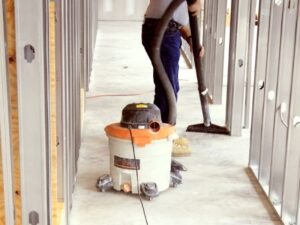
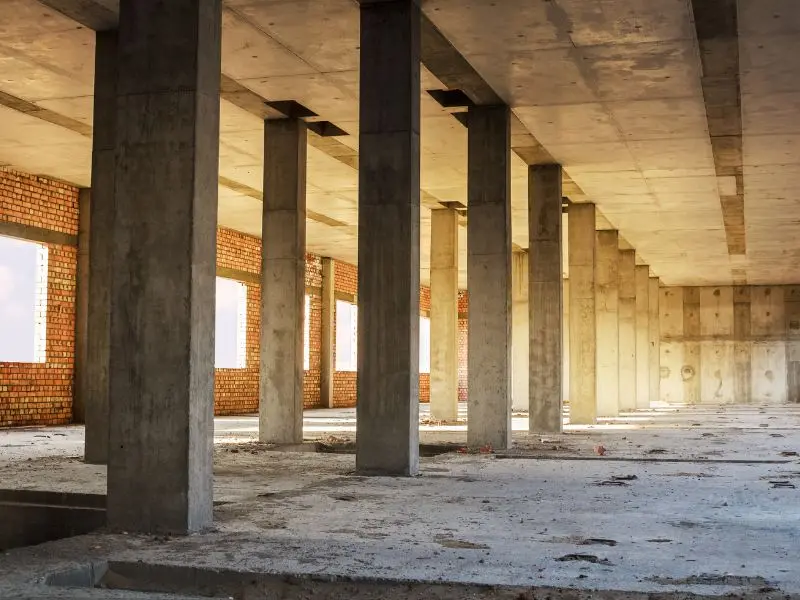
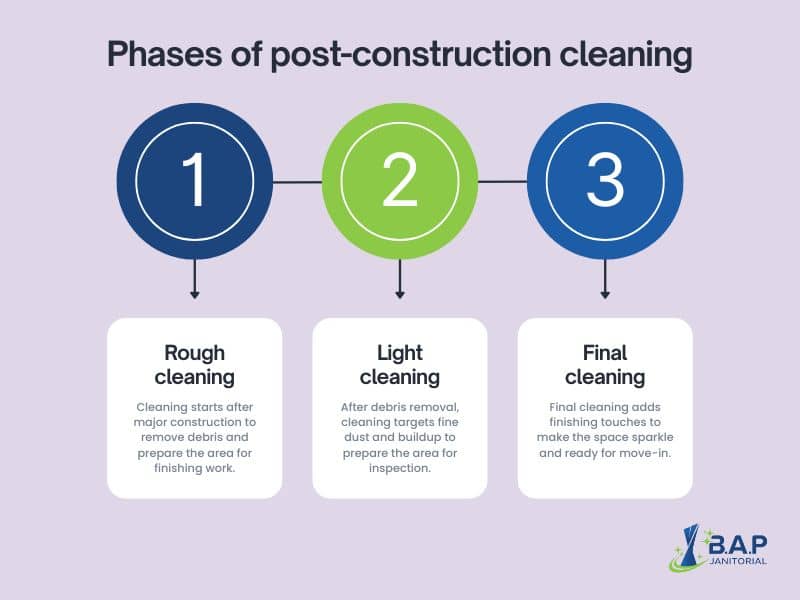
The phase 1 rough cleaning begins once the major construction activities have been completed and before the installation of finishes. The goal is to clear large debris and prepare the space for detailed work.
Typical steps include:
- Removing packaging, wood scraps, drywall, and leftover materials.
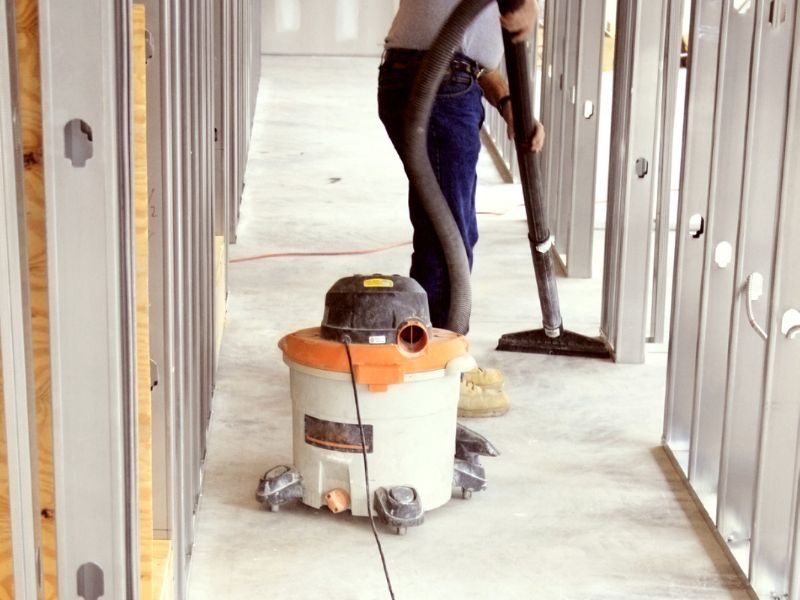
- Sweeping and vacuuming with industrial or HEPA filtered vacuums to remove dust and debris.
- Eliminating large stickers or protective films from windows and surfaces.
- Ensuring safe routes for movement through the site.
This phase transforms the construction area from a work zone into a clean, accessible environment for painters, electricians, or finishing contractors. Safety and surface protection are priorities—using heavy-duty bags, proper waste containers, and non-abrasive tools helps prevent scratches or damage.
Phase 2 – Light cleaning
Once heavy debris is removed, the phase 2 light cleaning targets fine dust and buildup left from finishing work. This stage gives the area a cleaner appearance and prepares it for inspection or installation of furniture and equipment.
Key tasks include:
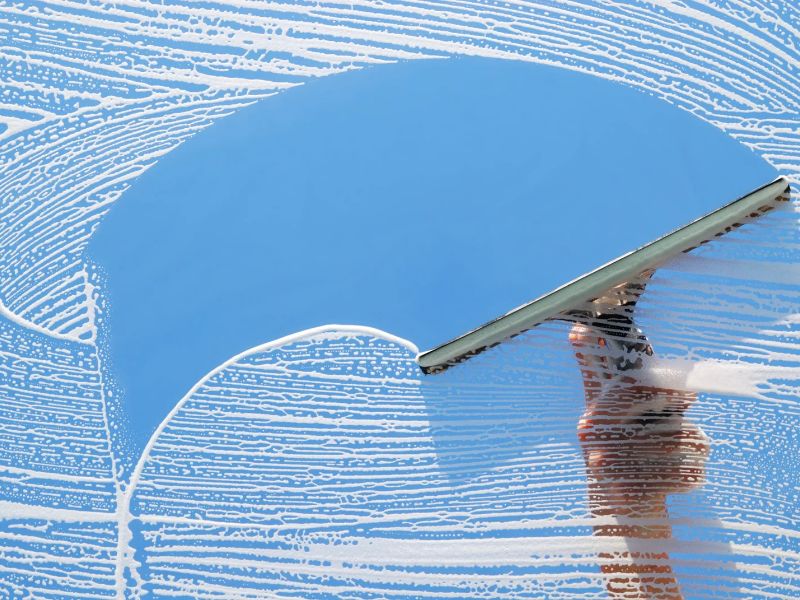
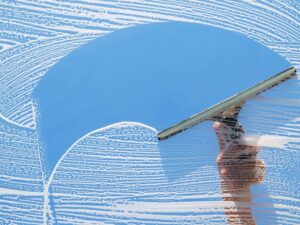
- Cleaning windows, glass panels, doors, frames, and railings.
- Wiping baseboards, moldings, and fixtures using microfiber cloths.
- Vacuuming vents, ducts, and high surfaces with HEPA filtered vacuums to eliminate fine particles.
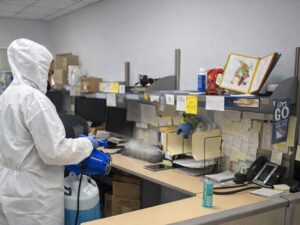
- Sanitizing sinks, counters, cabinets, and bathroom fixtures.
- Removing small adhesives, stains, or fingerprints without damaging finishes.
Because fine dust can settle multiple times during this stage, scheduling may require two passes to ensure that cleaning is completely effective. Proper coordination with other trades helps avoid rework and ensures that all surfaces are ready for the final detailing.
Phase 3 – Final cleaning
The phase 3 final cleaning, sometimes referred to as the touch-up clean, provides the finishing touches that make a space sparkle and ready for move-in.
This phase includes:
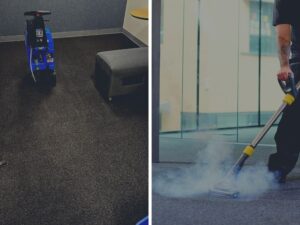
- Detailed floor cleaning, polishing, and sealing.
- Wiping all horizontal and vertical surfaces, including window sills, switches, and vents.
- Cleaning inside cabinets, drawers, and closets.
- Polishing metal surfaces, glass, and fixtures for a high quality finish.
- Performing a final inspection with a checklist or visual audit to confirm that the space is spotless.
After this phase, the space should be move-in ready, odor-free, and fully presentable for occupancy. Professional cleaners often conduct air circulation or filtration to remove residual dust and maintain indoor air quality.
Timeline and Coordination
The duration of post construction cleaning depends on the building size and complexity:
- Small offices or stores: 2–3 days.
- Medium commercial spaces or clinics: 4–7 days.
- Large buildings or multi-floor facilities: 1–2 weeks.
If schedules are tight, certain stages can overlap, but cleaning crews should never compromise the results. Effective coordination between cleaning teams and other contractors helps avoid costly delays and ensures all phases are completed efficiently.
Post-Construction Cleaning Phases and Compliance in New Jersey
Understanding the 3 phases of post-construction cleaning is essential for property managers, developers, and business owners in New Jersey who need their spaces ready for inspection and occupancy. The table below summarizes each phase, its key cleaning tasks, and the regulatory standards that govern safe and compliant operations across the state.
By following these guidelines, readers can ensure their cleaning process not only meets OSHA and NJDEP requirements, but also streamlines the final inspection and handover, reducing delays and guaranteeing professional results.
Summary Table: Phases, Tasks, Compliance Focus, Inspection Trigger
| Phase | Key Tasks | Compliance & Regulation Reference (New Jersey) | Inspection Trigger |
| Phase 1 -Rough Cleaning | Bulk debris removal, sweeping, vacuuming, dust mitigation, and egress clearance. | – NJ Department of Environmental Protection (NJDEP) Solid Waste Management – New Jersey Construction & Demolition Waste Recycling Guidelines – OSHA 29 CFR 1926.25 – Housekeeping in Construction | Pre-punch list inspection before finish installations. |
| Phase 2 – Light Cleaning | Surface and fixture detailing, adhesive and paint removal, HEPA vacuuming, sanitizing, and polishing. | – OSHA Respirable Crystalline Silica Standard (29 CFR 1926.1153) – NJDEP Indoor Air Quality & Dust Control Standards – MSDS-Compliant Cleaning Products (EPA Safer Choice) | Final trades walk-through and pre-occupancy inspection. |
| Phase 3 (Final Cleaning / Touch-Up) | High-touchpoint disinfection, floor finish, glass polishing, and final air circulation checks. | – NJ Department of Health (NJDOH) Cleaning & Disinfection Guidelines – EPA Surface Hygiene Standards – NJ Fire Code 5:70 for Occupancy Readiness | Certificate of Occupancy or Client Handover. |
Post-construction cleaning is far more intensive than standard commercial cleaning. It’s designed to tackle the unique challenges left behind after construction — from debris disposal and removal of heavy dust to a final precision cleaning that prepares the building for handover.
Budget and cost considerations

Cleaning budgets vary by project type, but typically 0.5% to 1% of the total construction cost should be reserved for final cleaning. Factors like surface materials, floor cleaning requirements, access height, and the presence of delicate finishes affect the price.
Tracking cleaning productivity—such as square footage per hour, percentage of rework, and final audit results—helps measure performance and control costs.
Common Risks and How to Prevent Them
Several issues can arise if the phases of post construction are not properly executed:
- Persistent dust or fine debris in HVAC systems.
- Damage to new finishes caused by harsh chemicals.
- Missed areas in high or tight corners.
- Schedule conflicts between cleaners and contractors.
Using proper cleaning products for each surface type—wood, glass, tile, or metal—and applying microfiber techniques can significantly reduce risks. Employing trained professional cleaners with the right tools ensures safety and consistent results.
Modern Tools and Best Practices
New Jersey cleaning contractors often rely on advanced technologies such as scrubbers, pressure air systems, and digital inspection tools. HEPA filtered vacuums, eco-friendly solutions, and modern high dusting equipment help deliver consistent and hygienic outcomes.
Digital checklists and photo-based reports can also simplify supervision, ensuring every area meets required standards before final approval.
How to Choose a Post-Construction Cleaning Contractor
When selecting a cleaning service, look for transparent proposals that break down costs per phase, include a clear timeline, and outline the cleaning methodology. Ensure that the company holds valid insurance and local certifications, especially if the property is in Bergen, Hudson, or Essex County.
Experience with large commercial or healthcare facilities is a strong indicator of reliability and quality.
Completing the 3 phases of post construction cleaning properly guarantees a smooth and successful handover. When cleaning is performed systematically—with attention to detail, safety, and the right technology—each project can transition seamlessly from construction to full operation.
If your project is nearing completion, let BAP Janitorial handle every phase with precision and care. Learn more about our Post-Construction Cleaning services in New Jersey and ensure your property is spotless, safe, and move-in ready.
FAQs
How long does post-construction cleaning take in New Jersey?
Between two and ten days, depending on building size and the number of phases required.
What does post-construction cleaning include?
All debris removal, dust elimination, detailed cleaning, sanitizing, and final polishing to make spaces ready for use.
How much does post-construction cleaning cost per sq. ft.?
Generally, between $0.25 and $0.60 per square foot, depending on debris volume and complexity.